



In real estate, delays are often seen as red flags. Investors hesitate, sentiments weaken, and in most real estate markets, the word “delay” creates doubt. Investors step back. Buyers become cautious. Confidence weakens.
But Noida has consistently rewritten this narrative. Here, delay is not a breakdown—it’s often a build-up to acceleration. And if you look closely at market patterns over the last decade, one thing becomes clear:
Some of the strongest price growth cycles in Noida have begun right after a project restart. Ithum 62 is now emerging as one of the most compelling examples of this phenomenon—this time in the commercial real estate segment.
Understanding the Noida Pattern: Why Delay Creates Opportunity
When a stalled or delayed project restarts, something unique happens. It doesn’t resume at peak market value. It re-enters at a corrected price point, often the lowest realistic entry available.
This creates a rare alignment:
- Price correction attracts fresh investors
- Developer focus returns with urgency
- Market confidence gradually rebuilds
- Demand begins to accelerate
And once this cycle begins, value doesn’t rise slowly—it moves decisively upward.
Proof from the Past: The NBCC Revival Effect
This pattern is not theoretical—it has already played out successfully. When NBCC stepped in to revive delayed residential projects in Noida:
- Entry prices were around ₹5,000 per sq. ft.
- Over time, these same locations moved beyond ₹12,000 per sq. ft.
This wasn’t just appreciation driven by inflation. It was a structured cycle:
Correction → Confidence → Acceleration
The early investors didn’t just benefit from growth—they benefited from entering at the point of maximum inefficiency in pricing.
Commercial Real Estate: The Next Growth Frontier
While this pattern was visible in residential projects, it becomes even more powerful in commercial real estate. Why? Because commercial assets are not driven by sentiment alone.
They are driven by economic activity.
Their value grows through:
- Business operations
- Rental income
- Occupancy rates
- Brand ecosystem
This makes commercial real estate inherently more performance-driven and scalable.
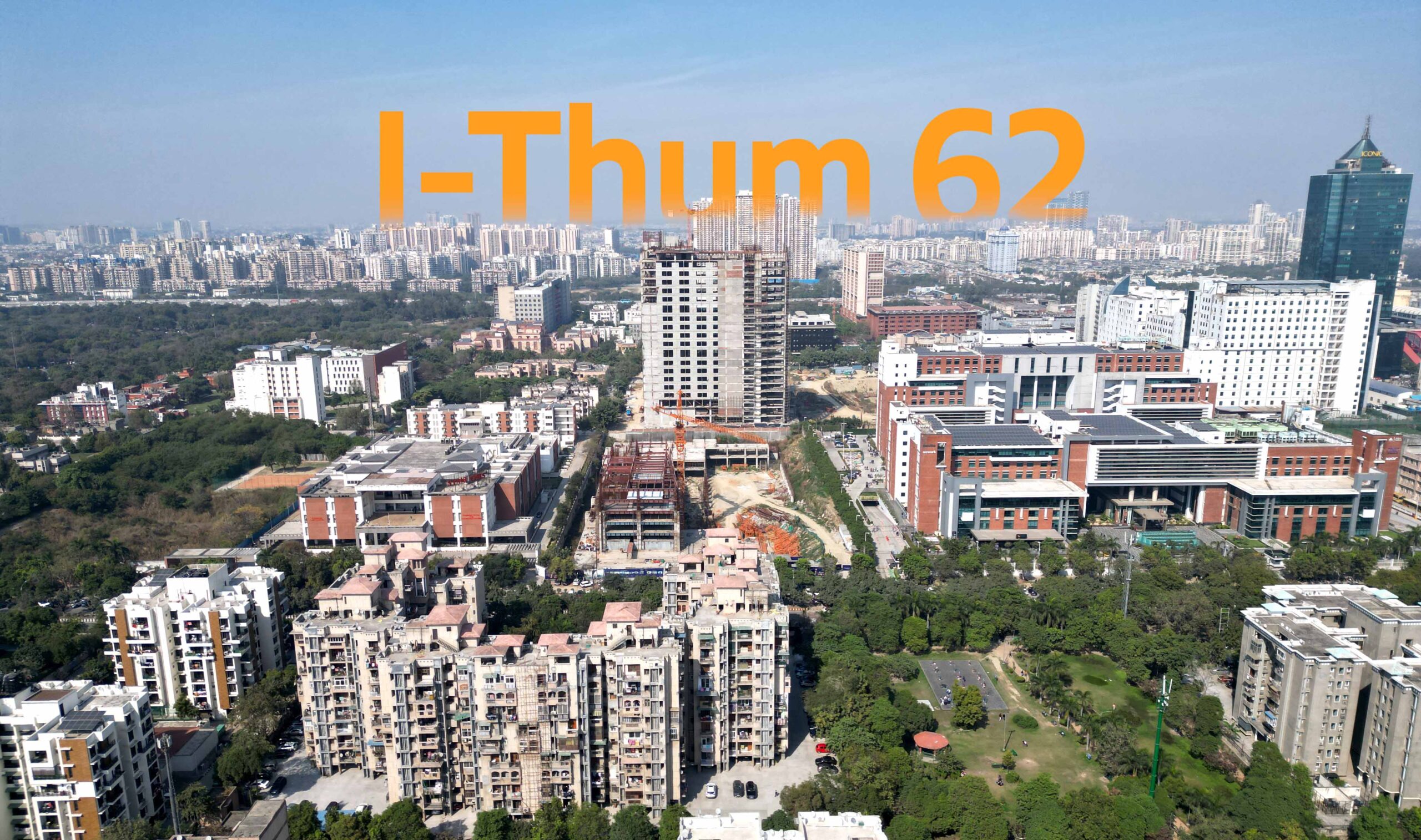
Ithum 62: A Live Case of Acceleration
Ithum 62 represents this transition in real time. When the project restarted:
- Entry pricing was around ₹10,000 per sq. ft.
Today:
- Prices are already approaching ₹16,000 per sq. ft.
And importantly, this growth has happened:
- Before full occupancy
- Before peak business activity
- Before complete investor confidence returns
Which means the core growth cycle is still unfolding.
Why Sector 62 Strengthens the Investment Case
A project alone does not create value—its ecosystem does. Sector 62, Noida, is already one of the most established commercial hubs in the region.
It offers:
- A strong base of IT and corporate offices
- High daily working population
- Consistent business traffic
- Metro connectivity and accessibility
This means Ithum 62 didn’t restart in uncertainty—it restarted in a market where demand already exists.
The Real Drivers of Future Value
As Ithum 62 progresses toward stabilisation, several key factors will push value upward:
Occupancy Growth
As more offices become operational, demand for space increases.
Business Footfall
Retail and service activity naturally follow office density.
Brand Entry
Recognised brands elevate credibility and attract further investment.
Cash Flow Stability
Rental income strengthens asset valuation.
These are not speculative drivers—they are structural drivers of commercial real estate growth.
The ₹20,000 Benchmark: A Future That Looks Normal
Given the current momentum, a price level of ₹20,000 per sq. ft. is not an unrealistic projection.
In fact, as:
- Occupancy stabilizes
- Businesses operate at scale
- Market confidence fully returns
This price point is likely to feel normalised rather than aspirational.
Commercial vs Residential: A Strategic Perspective
For long-term investors, understanding the difference is crucial:
- Residential real estate offers emotional security and stability
- Commercial real estate offers financial acceleration and yield
Commercial investments are tied directly to economic output, which means:
- Faster appreciation cycles
- Stronger rental potential
- Higher scalability of returns
Timing the Market: The Real Edge
One of the biggest mistakes investors make is waiting for certainty. But in real estate, certainty often comes after the growth phase has already played out.
The real advantage lies in:
- Entering at restart
- Positioning before stabilisation
- Investing before confidence peaks
Because by the time a project feels “safe,” a large part of the value has already been captured.
Conclusion: Noida’s Delay Is a Setup for Growth
Noida’s real estate story continues to challenge conventional thinking. Here:
- Delay does not destroy value
- Delay resets the value
- Delay creates the foundation for acceleration
Ithum 62 is not just another commercial project. It is a case study in motion—a live example of how market cycles, pricing correction, and demand alignment come together to create opportunity. The smartest investors are not waiting for completion. They are positioning themselves before the curve moves. Because in Noida, Delay doesn’t reduce value.
It prepares it to multiply.