



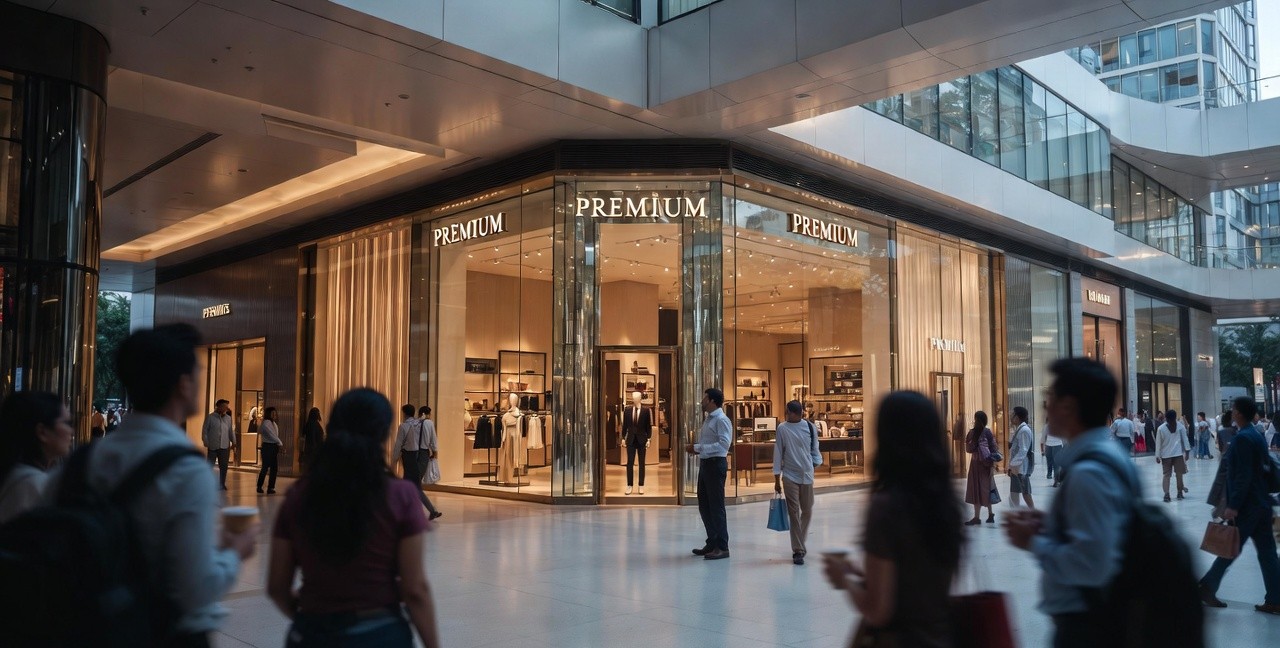

In retail real estate, one belief has dominated investor thinking for years: “Ground floor is the best.” And on the surface, it makes sense.
- Maximum visibility
- Direct access
- Immediate brand exposure
So naturally, most investors rush toward ground-floor units. But here’s what the market is quietly revealing:
The smartest investors are no longer chasing only the ground floor.
They are moving toward the lower ground floor.
Because in modern retail, footfall dynamics have changed.
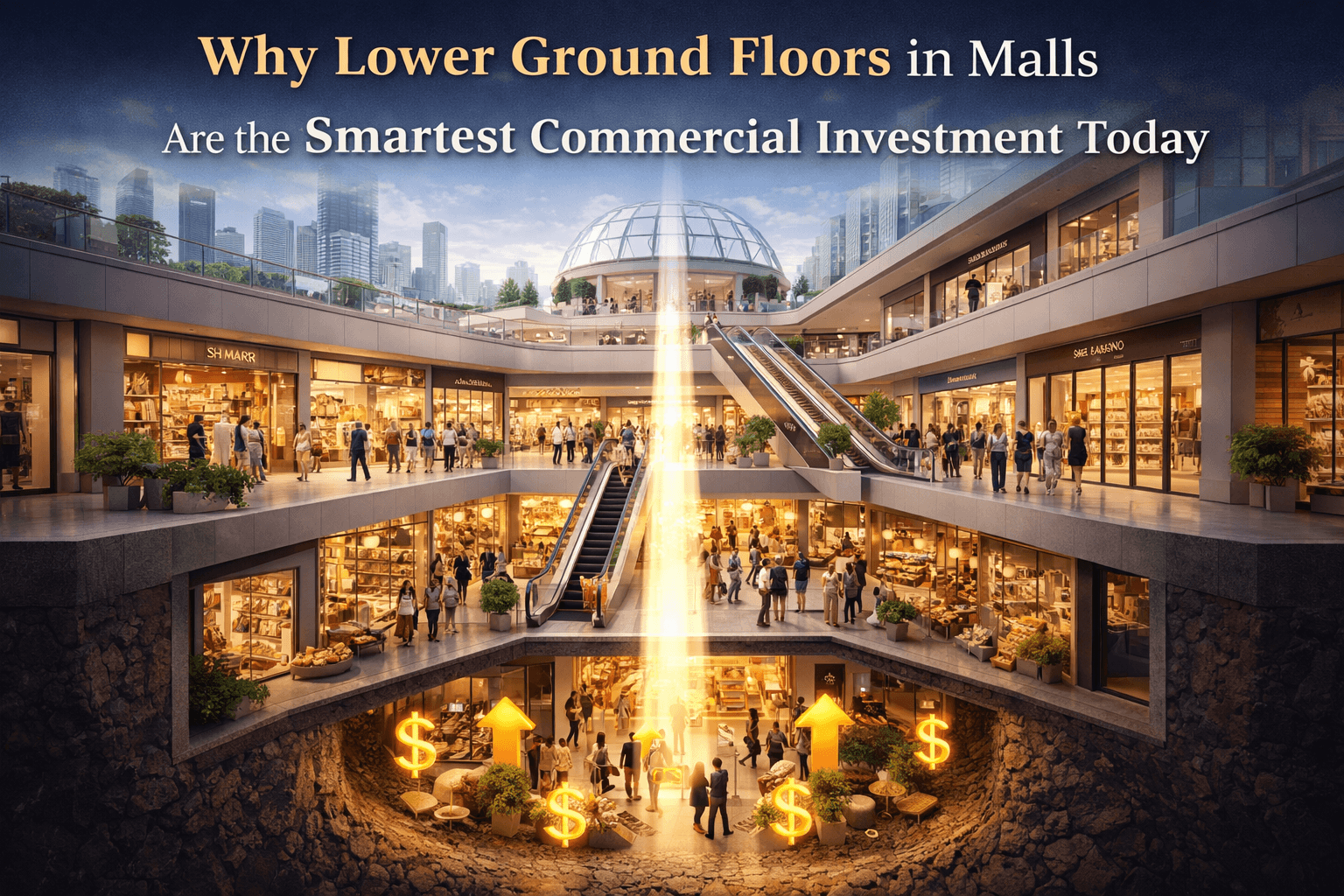
The Shift in Modern Malls: From Horizontal to Vertical Movement

Traditional high-street retail worked on street visibility. But today’s premium malls are designed very differently. They are vertical ecosystems, where movement is planned across levels—not just at entry. People don’t just walk straight anymore. They circulate through the mall. Why? Because malls today are experience-driven destinations. Visitors come for:
- Food courts
- Entertainment zones
- Multiplexes
- Supermarkets
- Anchor brands
- Lifestyle experiences
And here’s the key insight:
A large portion of these attractions are located on the lower ground floor. Which means:
Footfall naturally flows downward—not just forward.
Proof from Leading Malls
Look at some of the most successful commercial destinations:
- Logix Mall, Noida
- DLF Mall developments
- Stellar IT Park retail zones
- Haldiram’s flagship formats
- Shipra Mall
Across these projects, one trend is clear:
The lower ground floor is no longer a secondary space. It is:
- Active
- Functional
- Revenue-generating
Many high-performing brands operate successfully from these levels.
Why Lower Ground Floors Work So Well
Let’s break the logic down.
1. Footfall Is Guaranteed, Not Dependent on Street View
Brands today rely on internal mall traffic, not just external visibility.
2. Anchor Attractions Pull People Down
Supermarkets, food courts, and entertainment zones act as footfall magnets.
3. Dwell Time Is Higher
People spend more time exploring lower levels—especially for food and experiences.
4. Repeat Visits Increase
Daily needs (groceries, dining, services) are often fulfilled at lower levels.
The Pricing Advantage: Where Smart Investors Gain Edge
Now comes the most important part—numbers.
Ground Floor:
- Highest purchase cost
- Limited availability
- Lower rental yield (due to high entry price)
Lower Ground Floor:
- More accessible entry pricing
- Higher rental yield potential
- Faster tenant absorption
- Better liquidity at exit
This is where the strategy shifts.
Smart investors don’t just chase visibility.
They calculate efficiency.
The Biggest Misconception: “Lower Ground Is Inferior”
Lower ground floors are often perceived as “less valuable.”
But that’s not reality.
They are misunderstood, not underperforming.
In fact, in many premium malls:
- Cafés
- Restaurants
- Supermarkets
- Experience-driven brands
Generate stronger revenues from lower ground spaces than traditional retail does from upper levels. Because these businesses don’t depend on window display. They depend on:
- Footfall
- Convenience
- Consumption behaviour
And malls are designed to deliver exactly that.
Retail + IT: The Next Level of Commercial Strength
Now take this concept a step further. When retail is placed within or near IT and corporate hubs—like Ithum 62—its power multiplies. Why? Because of a continuous demand cycle:
Offices Create Daily Footfall
Thousands of professionals move in and out every day.
Professionals Bring Spending Power
Regular demand for food, services, and convenience retail.
Businesses Become Necessities
Cafés, quick-service restaurants, salons, and stores are no longer optional—they are essential.
Rentals Become Stable
Demand is consistent, not seasonal.
Why Floor-Wise Strategy Matters in Commercial Investment
Every floor in a commercial project serves a different purpose:
- Ground Floor: Visibility and branding
- Lower Ground Floor: Efficiency and high-yield retail
- Upper Floors: Specialised usage (offices, niche services, etc.)
The mistake most investors make is that they focus only on the most expensive floor, not the most logical one.
The Smart Investment Approach
A well-planned commercial portfolio doesn’t follow the crowd.
It focuses on:
- Entry price optimization
- Rental yield potential
- Demand sustainability
- Exit flexibility
And lower ground floors often check all these boxes.
The Real Insight: Commercial Real Estate Is About Flow
At its core, commercial real estate is not emotional. It is mathematical. It depends on:
- Footfall movement
- Spending behavior
- Demand cycles
- Financial returns
And lower ground floors align perfectly with these fundamentals.
Conclusion: Smarter, Not Cheaper
Investing in the lower ground floor is not a compromise. It is a strategic upgrade in thinking. It offers:
- Better entry pricing
- Stronger yield potential
- Faster occupancy
- Easier exit opportunities
This is not the cheaper option. This is the smarter option. Because in today’s retail ecosystem, value is not created by visibility alone. It is created by flow, footfall, and financial logic.