

Trends are exciting.
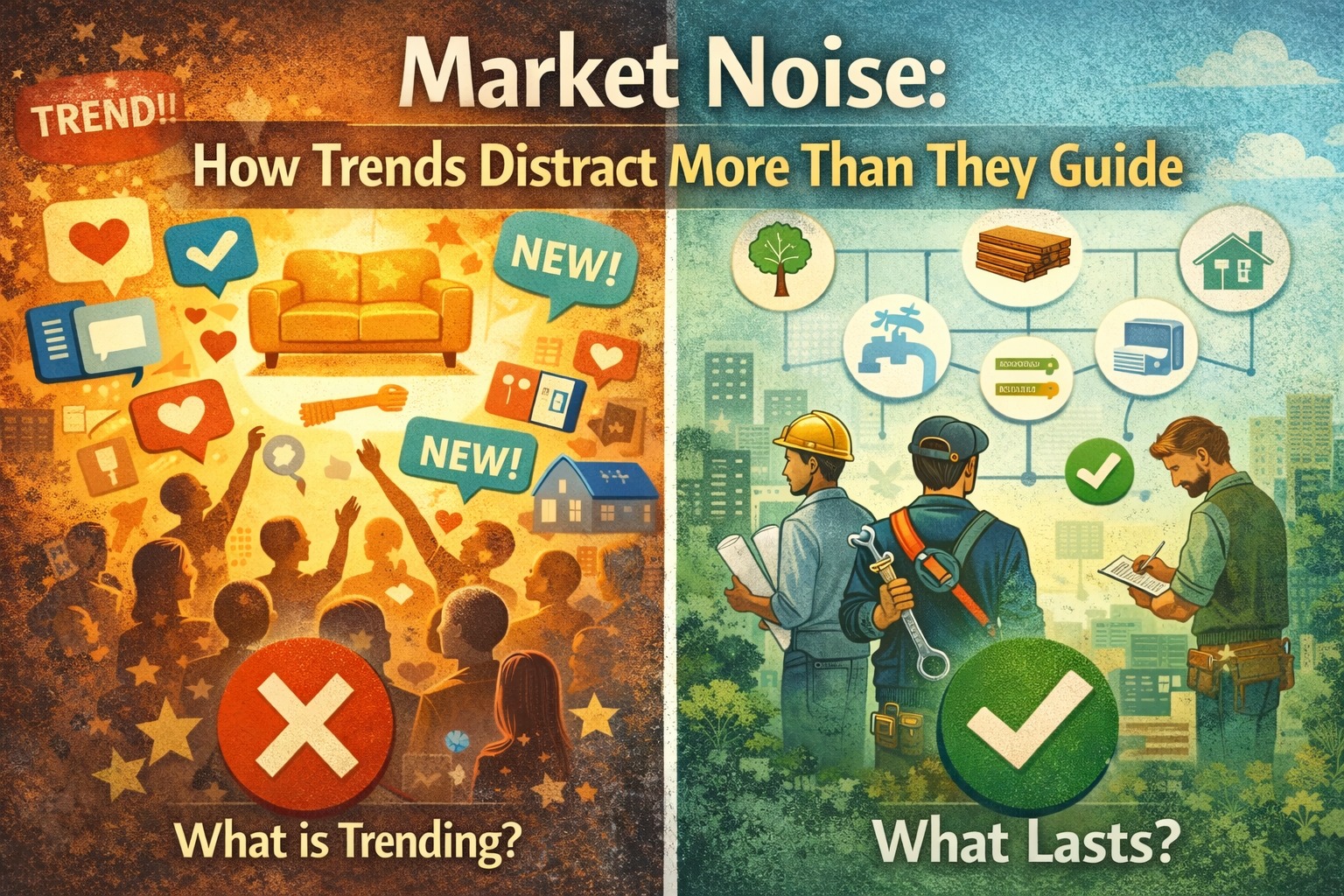
They promise modernity, relevance, and instant social approval. In the world of interiors and construction, they often arrive wrapped in glossy visuals and bold claims. But trends are also temporary—and decisions driven purely by them tend to age faster than the spaces they shape.
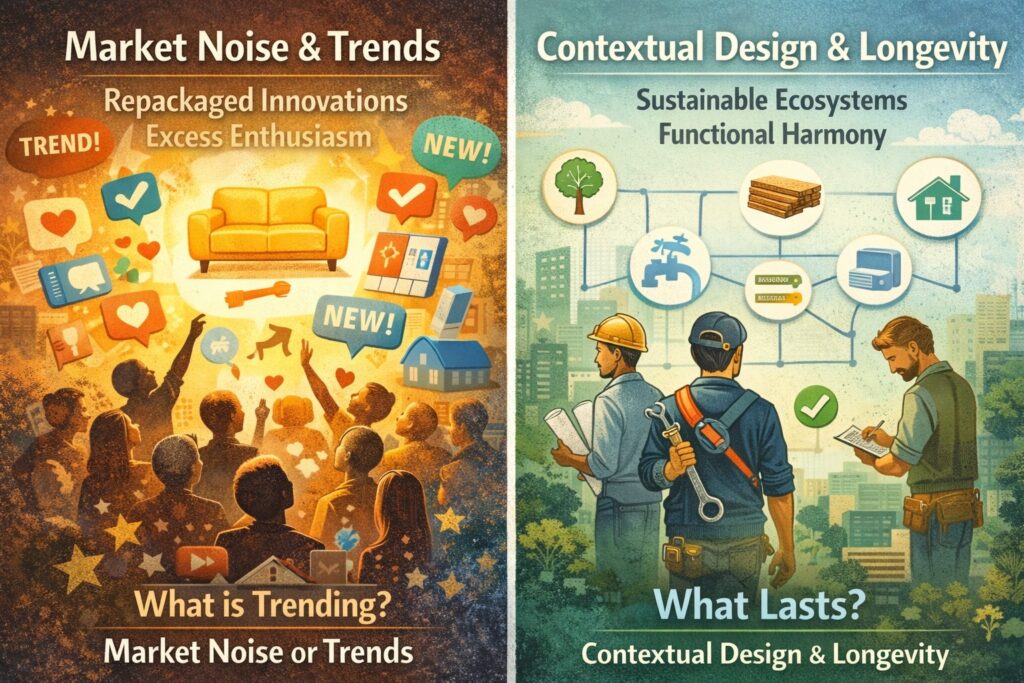
Today, interior design trends and construction innovations move at a speed never seen before. A color palette celebrated this year can feel outdated the next. A furniture style dominating social feeds may not survive everyday use. Even builders frequently promote “latest innovations” that are, in reality, repackaged versions of older methods.
This isn’t always misinformation.
More often, it’s market noise—an excess of enthusiasm without context.
The Problem With Chasing Trends
When planning a home, office, or real estate development, the most common question asked is:
“What’s trending right now?”
But that question rarely leads to lasting decisions.
A better, more meaningful question is:
“What is sustainable for my needs, my budget, and my ecosystem?”
Sustainability here goes beyond environmental impact. It includes:
- Long-term usability
- Maintenance costs
- Material durability
- Coordination between stakeholders
- Adaptability over time
Spaces that perform well over years are rarely designed to impress for a season.
Context Over Hype: Why Ecosystems Matter
This is where structured design and construction ecosystems change the equation.
When architects collaborate closely with material brands, when plumbers coordinate with interior designers, and when carpenters align with furniture planning, decisions stop being reactive. They become intentional and interconnected.
The result isn’t just visual harmony—it’s functional longevity.
Instead of isolated choices driven by trends, ecosystems enable:
- Better cost planning
- Fewer execution errors
- Smarter material selection
- Clear accountability
- Reduced rework and waste
The Quiet Rise of Digital Advisory Platforms
Increasingly, digital ecosystems and advisory-led platforms are becoming silent partners in this journey. Unlike trend-driven content, they don’t shout recommendations.
They:
- Organize trusted professionals
- Surface verified materials and services
- Connect inspiration with execution
- Maintain clarity from planning to delivery
These platforms don’t replace creativity—they protect it from chaos.
The Spaces That Last
The smartest homes, offices, and developments are not trend-driven.
They are context-driven.
They respond to lifestyle, climate, usage, budget, and long-term goals—not just what looks good on a screen today.
Because in real estate, interiors, and construction, what lasts is rarely what’s loudest.
And the quietest decisions often create the strongest foundations.