



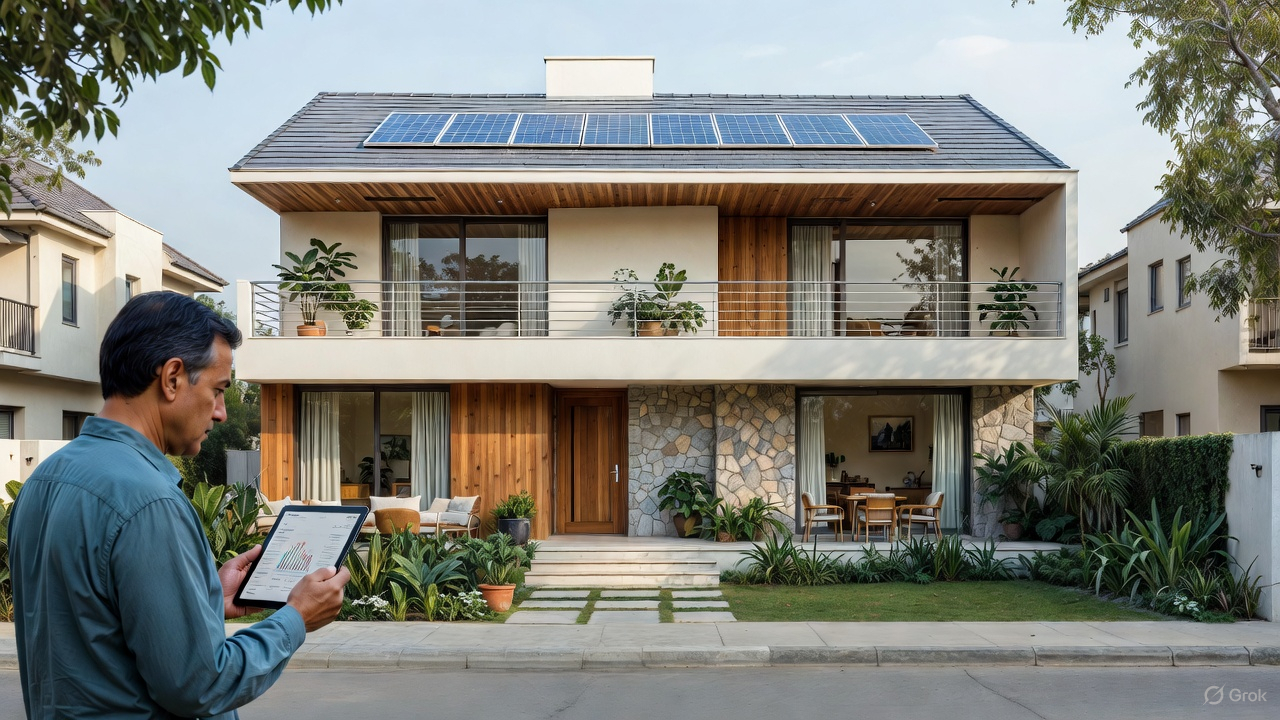
Imagine waking up to lush green surroundings where sunrays are beaming through the energy-efficient windows of your house, and the lush greenery purifying the air around your home. The concept of sustainable living, once a niche preference, is now shaping the future of the real estate industry in the country.
With the growing awareness of climate change and increasing urbanisation, real estate is not just a passing trend but a necessary evolution. What was once considered a luxury-energy efficiency, eco-friendly materials and sustainable architecture has become one of the important parts of future living.
Today, sustainable living is defining the way properties are built, designed and valued. But are sustainable homes merely a trend? A moral responsibility or a smart financial investment?
The answer is all three. They play a crucial role in defining today’s demand.
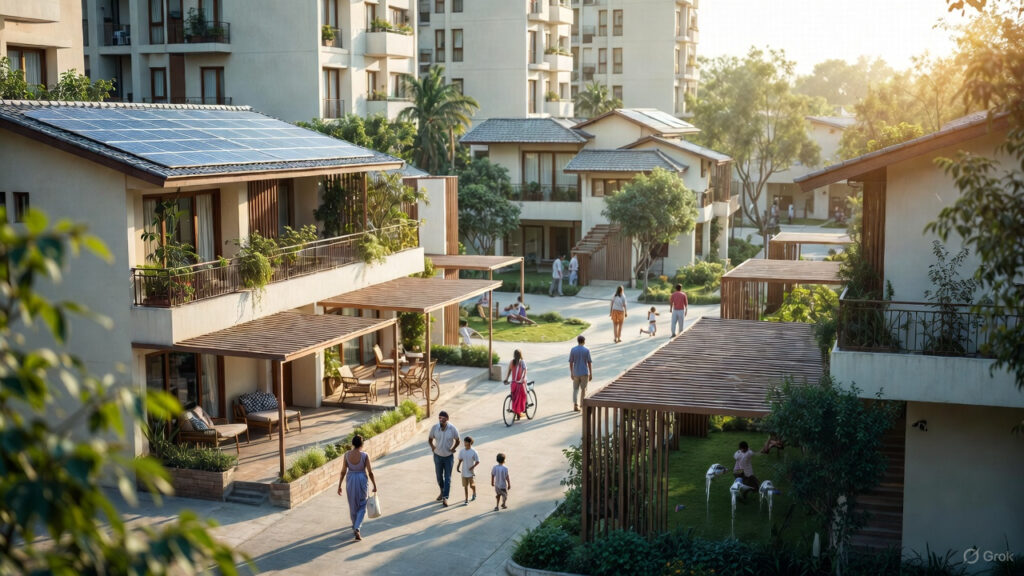
Growing demand for sustainable living
Real estate is significantly responsible for growing carbon emissions, accounting for about 39% of total energy related CO2 emissions. With urban areas expanding rapidly, the growing carbon emissions are increasing the burden. As cities grow, the need for sustainable infrastructure also becomes apparent.
Let us first understand what is a sustainable home? It is designed to control the environmental impact, while maximising energy efficiency, resource conservation and long-term durability. It integrates:
- Energy-efficient systems
- Eco-friendly construction materials
- Water conservation machines
- Waste reduction strategies
- Smart home technologies
Sustainability is not about adding solar panels at the end of construction. It begins at a planning stage.
Green buildings, also known as sustainable buildings, are designed to minimize environmental impact by using resources more efficiently.
Why sustainable homes are gaining momentum
Rising energy costs: Water cost, electricity cost in metros like Delhi, Bengaluru are skyrocketing. They are increasing rapidly. Energy efficient homes significantly reduce monthly utility bills, offering long-term savings. One of the biggest advantages of sustainable homes is reduced monthly expenses. Energy-efficient lighting, solar power systems and water saving fixtures also help in reducing the bills. No doubt, the initial purchase of these products might be costly but it gives long-term savings to the owners.
Environmental awareness: Air pollution, climate change and water scarcity, they all contribute to global warming. They have become a serious concern especially among the urban buyers who want to reduce their carbon footprints. Today, homebuyers are becoming more environmentally aware and conscious. Many actively seek green building certifications and low-carbon living options.
Government policies and initiatives: Regulatory push and initiatives like the Energy Conservation Building Code (ECBC) and incentives for green building certifications like LEED (Leadership in Energy and Environmental Design) and GRIHA (Green Rating for Integrated Habitat Assessment) have played a pivotal role in encouraging developers to adopt sustainable practices. The Government and authorities are encouraging green building norms, making sustainability a compliance factor rather than an option.
Health and wellness: Sustainable homes offer better indoor air quality, improved ventilation, and more natural lighting. These factors help reduce health problems caused by poor air pollution and poor indoor conditions. In a growing urban population environment, green homes provide better health benefits and environment.

Features that truly matters
Not all green labels are equal. Real sustainability lies in measurable performance. Homebuyers are more interested in sustainable properties that typically look for
- Energy efficient products like solar panels, LED lightings, energy efficient appliances, smart energy monitoring systems.
- Water conservation: water scarcity is a pressing issue. Sustainable buildings address this by employing water saving fixtures, rainwater harvesting systems, and greywater recycling. These measures help reduce water consumption by upto 50% as per data by the Ministry of environment, forest and climate change. Developers are increasingly using these water saving features in their residential properties to meet the demands of the water efficient homes.
- Sustainable materials: The choice of building material plays a crucial role in sustainable homes. The use of recycled, locally sourced and eco-friendly materials reduces the environmental impact of construction. Using fly ash bricks, bamboo, and recycled steel can lower the carbon footprint of the building by upto 30%. Sustainable materials are often more durable, reducing the need for frequent repairs.
Benefits for sustainable homes
People feel sustainable homes are expensive. In reality, the initial cost may be slightly higher but in the long run financial benefits often outweigh the initial investment.
Low operating cost: one of the biggest advantages of making a sustainable home is reduced monthly expenses. Energy efficient lightings, solar power systems, and water saving fixtures significantly lower water and electricity bills.
Higher resale value: Green certified societies increasingly command premium resale prices due to demand.
Reduced maintenance: durable, eco-friendly material often lasts longer and requires less repair. Sustainability is not an expense. It is rather risk management and value creation.
Final thoughts
Sustainable homes are not just a trend, they represent the future of responsible real estate and development. The growing environmental awareness, cost saving, health benefits, are all evolving buyers preference