


Wave City vs Siddharth Vihar vs Raj Nagar Extension: Finding Ghaziabad’s Next Real Estate Growth Corridor
For two days, SFS has followed Ghaziabad’s transformation from an affordability-led market to an increasingly premium residential destination. We looked at the infrastructure changing the city, and then at the developers responding to that change. Now comes the question that matters most to a homebuyer or investor: where should the next square foot be bought?
The Story Has Always Been About More Than a Flat
A property does not exist in isolation. The apartment may be beautifully designed. The clubhouse may be impressive. The developer may have a strong reputation. But the long-term value of a home is also shaped by what happens outside the project’s boundary.
What roads connect it?
How quickly can residents reach Delhi, Noida or Meerut?
Are schools, hospitals and retail already operational?
Is the neighbourhood still being built, or has it matured?
And perhaps most importantly, how much room does the location have to grow?
These questions bring us to the three micro-markets that increasingly define Ghaziabad’s new residential story:
Wave City.
Siddharth Vihar.
Raj Nagar Extension.
They are not identical markets, and that is precisely why comparing them is useful.

Three Corridors. Three Different Investment Stories.
At first glance, all three locations appear to offer the same proposition: modern housing, improving connectivity and relatively attractive pricing compared with the most expensive parts of NCR. But look closer, and their growth models are different.
Raj Nagar Extension is an established residential market that has benefited from affordability and improving connectivity.
Siddharth Vihar has moved towards the premium end, helped by its strategic location and proximity to established NCR destinations.
Wave City is the township story a large planned ecosystem with significant development potential.
That difference should influence how a buyer evaluates them.
1. Wave City: The Planned-Township Bet
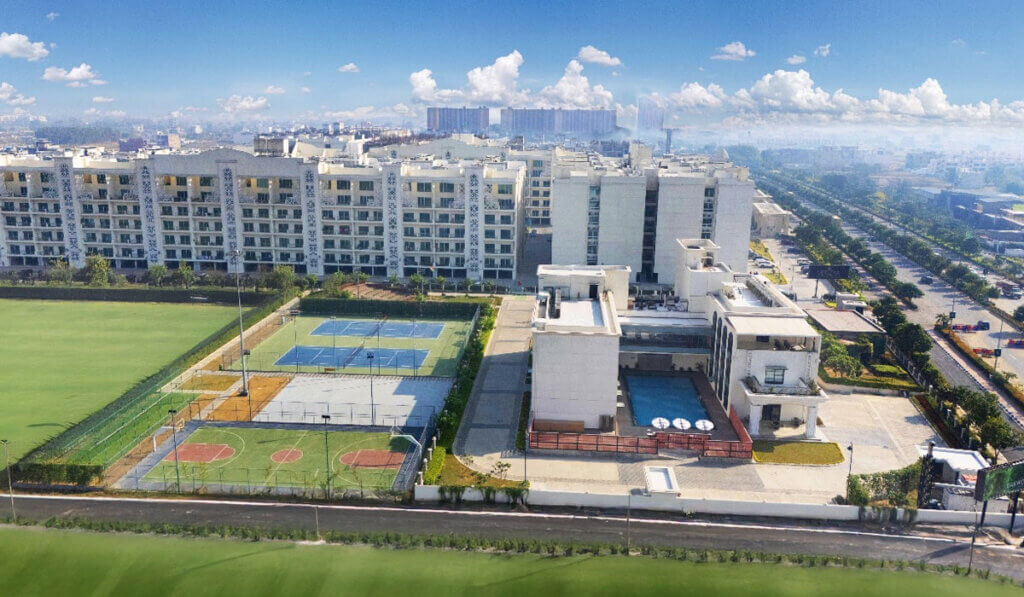
If the investment thesis is based on long-term urbanisation, Wave City deserves serious attention. The defining characteristic of Wave City is scale. Rather than being simply another residential pocket containing multiple apartment societies, it has been conceived as a large integrated development with residential, commercial and lifestyle components. That distinction matters.
A township can create its own ecosystem as development progresses. Schools, retail, recreational spaces, roads and residential communities can reinforce one another, making the location increasingly self-sufficient.
Current market data also points towards significant price movement in Wave City. Magicbricks’ locality data shows average asking prices around ₹9,434 per sq ft in April–June 2026, compared with ₹7,714 per sq ft for 2025, although these are portal asking-price indicators rather than transaction prices.
That trajectory is important, but it also comes with a caveat. When a market has already appreciated rapidly, investors should not assume that the historical rate of appreciation will simply continue.
The question becomes whether future infrastructure, commercial development and occupancy can justify the next phase of growth.
What works for Wave City
- Planned township environment
- Large development scale
- Premium residential supply
- Growing lifestyle ecosystem
- Strong road connectivity
- Scope for further development
What investors should watch
- Pace of commercial development
- Actual occupancy and end-user demand
- Infrastructure execution
- Project-specific pricing
- Maintenance and township-level development
Best suited for
Long-term investors and families who want a planned community and are comfortable with a multi-year investment horizon.
2. Siddharth Vihar: The Premium Urban Play
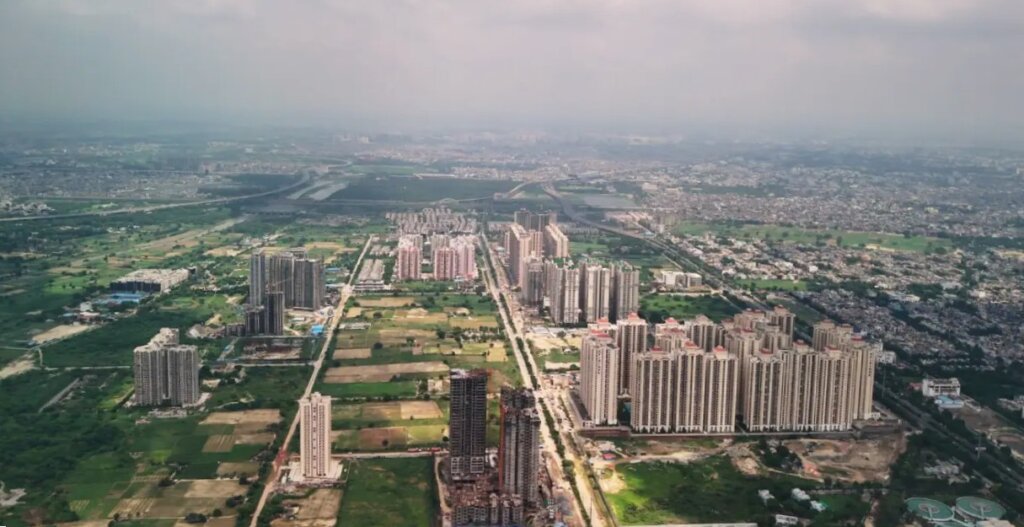
If Wave City is the township bet, Siddharth Vihar is the urban connectivity bet. Its appeal comes from its strategic position. The micro-market sits close to major NCR movement corridors, giving residents access to Delhi, Noida and other parts of Ghaziabad.
That accessibility has helped the location attract increasingly premium residential developments. And the market is already commanding a premium.
A 2026 property-rate compilation from NoBroker places indicative prices in Siddharth Vihar around ₹10,182–₹10,404 per sq ft, though such portal figures should be treated as indicative rather than as transaction benchmarks. This illustrates an important point.
Siddharth Vihar is no longer purely an early-stage affordability play. The market has already moved towards premium pricing. For an investor, that means the opportunity is less about buying at the absolute bottom and more about identifying projects that can continue to command a premium as the neighbourhood matures.
Why Siddharth Vihar Could Remain Relevant
The location benefits from the broader infrastructure transformation of Ghaziabad. As road and regional transit connectivity improves, strategically located residential markets become increasingly attractive to professionals who want access to multiple employment centres.
The micro-market’s premiumisation is also visible in the product being offered. Large-format apartments, luxury amenities and high-rise residential developments are increasingly becoming part of its identity. That creates a virtuous cycle:
Better connectivity → Better developers → Better housing → Better buyers → Stronger neighbourhood positioning.
What works for Siddharth Vihar
- Strategic NCR location
- Premium residential positioning
- Strong connectivity
- Large-format homes
- Growing lifestyle infrastructure
What investors should watch
- Entry price
- Supply pipeline
- Project-level execution
- Actual end-user absorption
- Rental demand relative to purchase price
Best suited for
Premium end users and investors looking for a more established urban location rather than an early-stage township opportunity.
3. Raj Nagar Extension: The Value-to-Growth Play
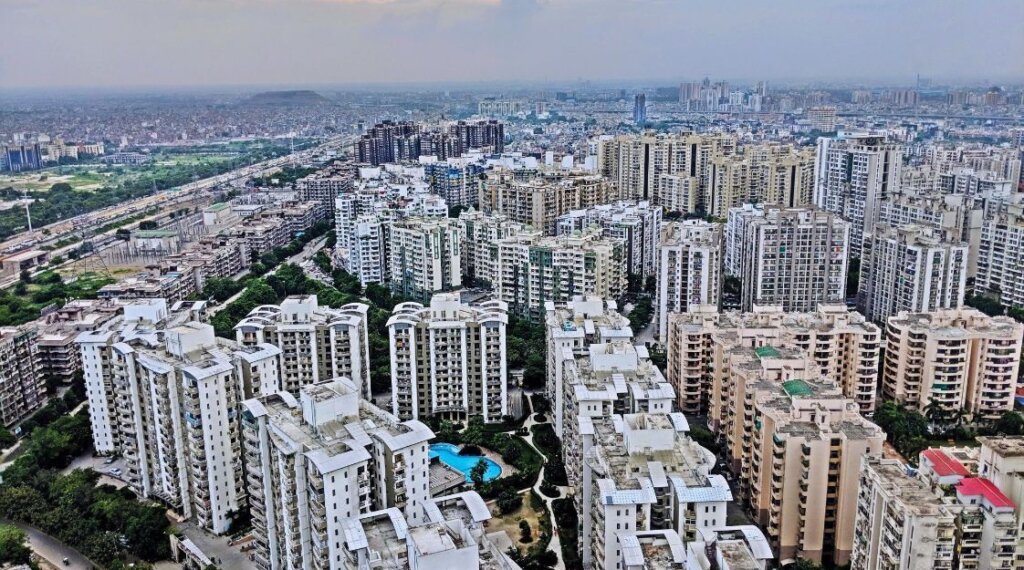
Raj Nagar Extension tells a different story. It is one of the locations that helped establish Ghaziabad as a major residential market outside the traditional Delhi core. Its biggest advantage has historically been affordability. That advantage remains relevant.
Current Magicbricks data puts the locality’s average asking price at around ₹6,973 per sq ft in April–June 2026, compared with ₹6,725 per sq ft in January–March 2026. The same data shows a 2025 average of ₹5,869 per sq ft, indicating meaningful appreciation over the previous year. Again, these are portal asking-price indicators, not registered transaction values.
That makes Raj Nagar Extension particularly interesting for buyers who want to enter Ghaziabad at a lower price point than the premium corridors. But there is a trade-off.
A more affordable entry price can mean a different appreciation profile from a premium township or strategically located luxury corridor. Raj Nagar Extension’s investment case therefore rests less on a sudden transformation and more on steady residential demand, connectivity improvements and continued urbanisation.
What works for Raj Nagar Extension
- Lower entry point than premium micro-markets
- Established residential base
- Strong family demand
- Improving connectivity
- Wide range of housing options
What investors should watch
- Project-level differentiation
- Road and civic infrastructure
- Future supply
- Rental demand
- Resale liquidity
Best suited for
End users and value-conscious buyers seeking a balance between affordability and future growth.
The Three-Way Comparison
Once the three locations are viewed independently, the differences become clearer.
Comparative Analysis
| Factor | Wave City | Siddharth Vihar | Raj Nagar Extension |
|---|---|---|---|
| Market Character | Planned township | Premium urban corridor | Established residential market |
| Entry Position | Premium | Higher premium | Relatively accessible |
| Lifestyle Ecosystem | ★★★★★ | ★★★★☆ | ★★★★☆ |
| Connectivity | ★★★★☆ | ★★★★★ | ★★★★☆ |
| Premium Housing | ★★★★★ | ★★★★★ | ★★★☆☆ |
| Long-Term Development Scope | ★★★★★ | ★★★★☆ | ★★★★☆ |
| End-User Appeal | ★★★★★ | ★★★★★ | ★★★★★ |
| Investment Profile | Long-term growth | Premium appreciation | Value + steady growth |
The important takeaway: there is no universal winner. The right choice depends on what the buyer is trying to achieve.
And This Is Where Price Becomes Important
One of the strongest arguments for Ghaziabad has always been its relative value within NCR.
But “affordable” does not mean “cheap.” It means the buyer gets more for the amount invested. That equation is becoming particularly relevant as prices in neighbouring NCR markets rise.
For context, a recent Economic Times report citing market data found that Noida’s average residential prices rose from ₹4,795 per sq ft in 2019 to ₹10,780 per sq ft in Q2 2026, a 125% increase over the period.
That does not mean Ghaziabad will replicate Noida’s appreciation. But it explains why buyers are increasingly examining the next layer of NCR markets. And Ghaziabad is increasingly being evaluated not simply as a cheaper alternative, but as a market with its own growth drivers.
Infrastructure Has Already Started Changing the Equation
The Delhi–Dehradun Expressway has added another layer to this story. A Tribune report published in April 2026 reported a 30% surge in Ghaziabad property prices following the expressway’s inauguration, while also noting a shift towards larger, better-designed townships among a new generation of buyers.
Another Tribune report subsequently described Ghaziabad as a strategic anchor for the emerging connectivity network linking the Delhi–Dehradun corridor, Namo Bharat/RRTS and Delhi–Meerut Expressway.
The exact appreciation an individual project delivers will, of course, depend on its location, developer, launch price, execution and market conditions. But the broader message is clear:
Infrastructure is no longer a future promise in Ghaziabad. It is already influencing the market.
So Where Does the Investor Go From Here?
This is where the distinction between location and project becomes critical. A strong micro-market does not automatically make every project within it a good investment. Likewise, a well-designed project cannot completely overcome a weak location.
The strongest proposition usually comes from the intersection of three factors:
Location + Developer + Product
If all three work together, the investment case becomes stronger.
That is why our earlier analysis of the developers matters here. Wave City’s township ecosystem, for example, becomes more compelling when paired with a project designed for long-term family living. And this brings us back to SKA Divine.
Why SKA Divine Fits the Wave City Story
SKA Divine is not being evaluated here simply because it is a premium project. Its relevance comes from the fit between the project proposition and the micro-market proposition.
Wave City is built around the idea of an integrated urban environment. SKA Divine’s project planning similarly emphasizes the residential community rather than only the apartment. The project describes a development spread across approximately 5 acres, with three towers and 536 residences, offering 3, 3.5 and 4 BHK homes. It also presents a broad amenity ecosystem encompassing social, wellness, recreational and landscaped spaces.
That alignment is important.
A buyer choosing Wave City for planned community living would naturally look for a project that delivers on that promise at the development level. In that context, SKA Divine emerges as one of the most compelling premium residential propositions within the Wave City segment, particularly for an end user who values space, community infrastructure and long-term liveability.
This is an SFS editorial assessment, not a guarantee of investment returns.
The SFS Investment Matrix
To make the comparison useful for readers, Square Foot Story has evaluated the three micro-markets across the factors most relevant to a residential buyer.
The Three Corridors’ Scorecard
| Parameter | Wave City | Siddharth Vihar | Raj Nagar Extension |
|---|---|---|---|
| Connectivity | 4.5/5 | 5/5 | 4/5 |
| Lifestyle | 5/5 | 4.5/5 | 4/5 |
| Premium Housing | 5/5 | 5/5 | 3.5/5 |
| Future Development Scope | 5/5 | 4/5 | 4/5 |
| Family Living | 5/5 | 4.5/5 | 5/5 |
| Relative Value | 4/5 | 3.5/5 | 5/5 |
| Long-Term Potential | 5/5 | 4.5/5 | 4/5 |
SFS Editorial Reading
Wave City: Best suited to buyers thinking long term and prioritising a planned township ecosystem.
Siddharth Vihar: Strong option for premium buyers prioritising strategic urban connectivity.
Raj Nagar Extension: Attractive for buyers prioritising entry value and established residential demand.
But Investors Should Not Chase Appreciation Alone
This may be the most important conclusion of the entire three-part series. Real estate investment is not simply about buying where prices are rising. A buyer should also ask:
Can I afford the holding period?
Will I actually want to live here?
What happens if appreciation slows?
Is there genuine end-user demand?
What is the resale market like?
What are the maintenance and carrying costs?
Is the developer’s execution record strong enough?
And above all:
Am I buying the right property, or simply buying the right story?
Infrastructure stories create excitement. Good real estate creates lasting value.
Our Final Ranking Is Not One Ranking
Instead of declaring one locality the winner for everyone, Square Foot Story’s conclusion is segmented.
For long-term township living
Wave City
Its large-scale planning and continuing development make it particularly relevant to buyers with a longer horizon.
For premium urban connectivity
Siddharth Vihar
Its strategic location and premium residential positioning make it attractive to buyers who prioritise accessibility and lifestyle.
For value-conscious end users
Raj Nagar Extension
Its comparatively lower entry point and established residential ecosystem make it relevant for families looking for value.
And Within the Premium Wave City Story…
For buyers specifically looking for a 3, 3.5 or 4 BHK premium family residence, SKA Divine deserves a closer look.
Its scale, configuration, community-oriented planning and amenity ecosystem align closely with the characteristics that are increasingly defining premium housing in Ghaziabad. It is not necessarily the right property for every investor.
But for the buyer whose priorities are space, lifestyle, township living and long-term end use, it stands out as a particularly relevant project to evaluate.
The Bigger Picture
Three days ago, the question was:
Can Ghaziabad compete with the rest of NCR?
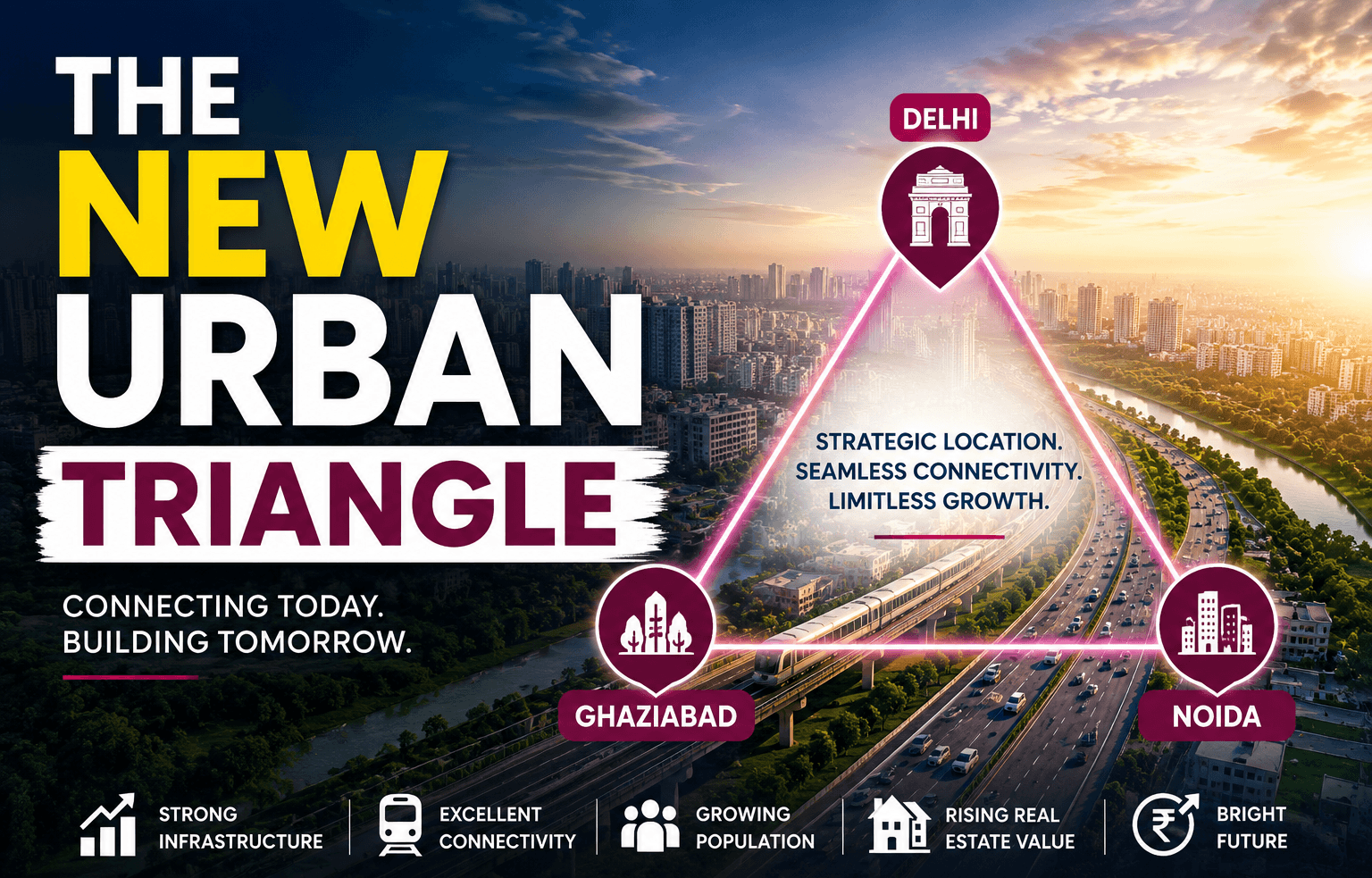
Today, the answer is more nuanced. It does not need to become another Noida or another Gurugram. It is developing its own proposition. A city where infrastructure is improving. Where premium developers are entering. Where townships are becoming more sophisticated. Where buyers can still find relatively better value than in several mature NCR markets.
And where locations such as Wave City, Siddharth Vihar and Raj Nagar Extension are developing distinct identities of their own. The next phase of Ghaziabad’s growth will therefore not be defined simply by how many homes are built. It will be defined by what kind of city those homes create.
Square Foot Story Verdict
Ghaziabad is no longer merely NCR’s affordable alternative. It is becoming an independent real estate opportunity.
For investors, the opportunity lies in identifying the right micro-market before it reaches full maturity.
For end users, the opportunity lies in buying into communities that offer not just an apartment, but a better quality of life.
And for developers, the opportunity is even bigger: to help shape a city that is moving from being an extension of Delhi to becoming a destination in its own right.
Wave City currently presents the strongest long-horizon township proposition of the three micro-markets examined. Siddharth Vihar offers a stronger premium urban-connectivity proposition, while Raj Nagar Extension continues to make the strongest case for value-conscious end users.
Within the Wave City premium residential segment, SKA Divine stands out as a project worth serious consideration for buyers seeking larger-format homes, community infrastructure and long-term end-use value.
But as always in real estate:
The best investment is not necessarily the property with the loudest promise. It is the one where location, developer, product and price make sense together.
From SFS Desk:
Ghaziabad Part 3 Article