






Eco -friendly paints are the new fad that has recently become an important choice in our lives. With the growing awareness of climate change, the demand for sustainable, eco-friendly paints have soared. The paint industry has been undergoing a quite powerful transition, seeing the growing demands of the people for sustainability over traditional paints.
Eco-friendly paints are quickly replacing traditional paint options in homes, offices, and industrial spaces. What was once considered a niche choice is now becoming the new standard. So, what’s driving this shift? Let’s explore why eco-friendly paints are shaping the future of design.
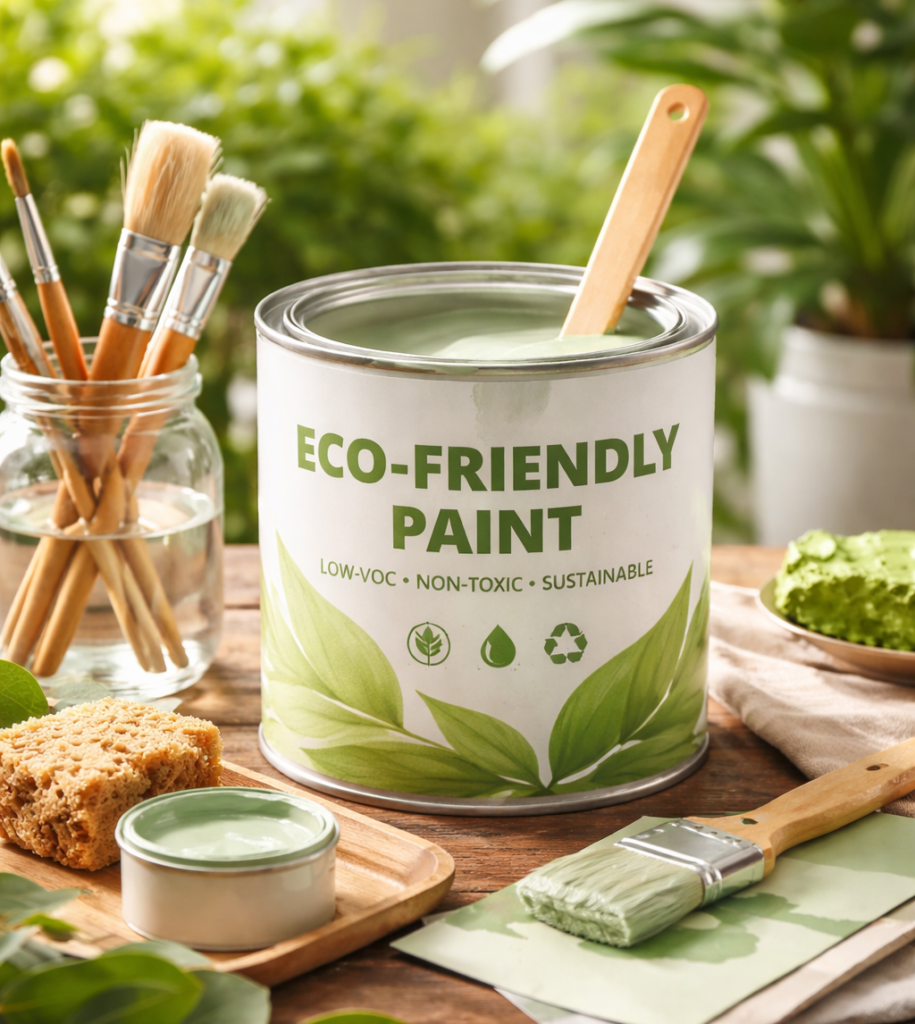
Green alternative or eco-friendly paints are a preferred choice as it does not harm both people and the environment. Unlike conventional paint, they contain low or zero volatile organic compounds- the chemicals responsible for strong odors and indoor air pollution.
Some of the natural or recycled materials that are used to make the eco-friendly paints are plant resins, clays and minerals that reduce reliance on fossil fuels, and decrease carbon emissions. Many modern eco-friendly paints are:
- Water-based
- Low-odor or odor-free
- Free from heavy metals like lead and mercury
- Made using natural or bio-based ingredients
Health is paramount
One of the main reasons for the demand of eco-friendly paints is health awareness. Traditional paints release VOCs that can cause
- Headaches and dizziness
- Eye, nose and throat irritation
- Allergic reaction
- Long-term respiratory issues
Eco-friendly paints improve air quality, making them safer for:
- Elders and children
- Pets
- Individuals with asthma or allergies

These paints generally have low levels of VOCs, ensuring no toxic fumes persist once the paint is dried. They help in promoting a healthier indoor air quality. Hence, they become especially popular for homes, offices, schools and hospitals.
Better for environment
Sustainability is no longer optional–it’s a responsibility. Environmentally friendly paints are produced using sustainable materials and methods, resulting in a reduced environmental impact compared to conventional paint. Eco-friendly paints help reduce environmental damage by:

- Lowering air pollution
- Reducing carbon footprint manufacturing
- Using renewable or recycled materials
- Minimizing hazardous waste
Additionally natural components in eco-paints are biodegradable and contribute to improving the air quality within buildings. As industries and government are moving towards greener practices, sustainable coatings are becoming a preferred choice in construction and infrastructure projects.
Performance without compromise
There is a common myth that eco-friendly paints do not last long or perform well. Today that’s far from true.
Modern eco-friendly paints offer:
| Excellent durability | Strong adhesion |
| Resistance to fading, moisture and stains | Smooth and premium finishes |
In many cases they perform well as traditional paints.
Cost an investment, not an expense
Eco-friendly paints may cost slightly more upfront but they offer long-term value.
- Reduced health related issues
- Longer repainting cycles
- Lower environmental compliance cost in industrial use
As demand increases prices continue to become more competitive.
Future of paints
With rising environmental regulations, growing consumer awareness and continuous innovation- eco-friendly paints are not just a trend-they are the future. From homes to offices to industrial buildings, sustainable paints are redefining how we think of colours, safety and responsibility.
Eco-friendly paints are sustainable paints and by choosing them home owners are enhancing indoor air quality and reducing environmental impact.