




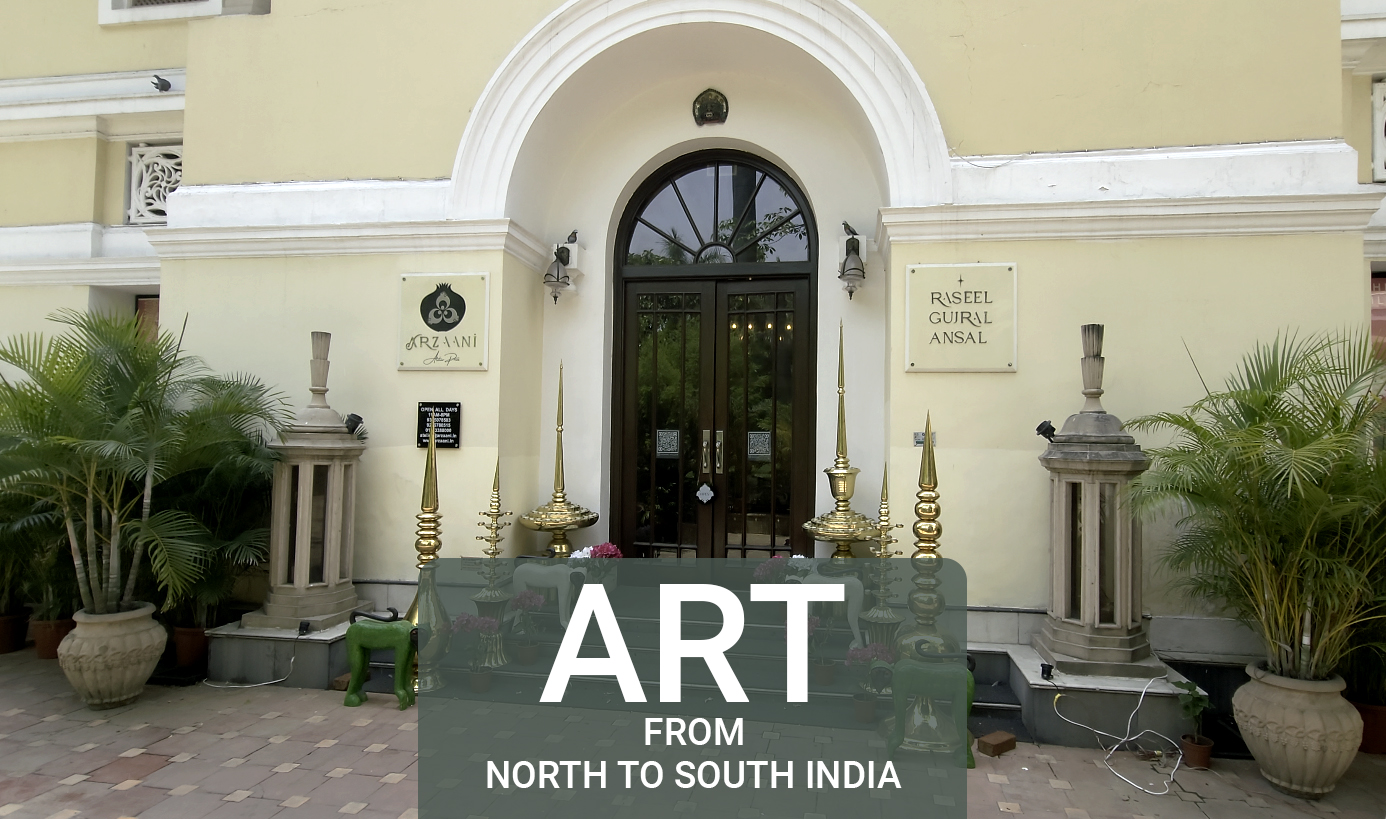
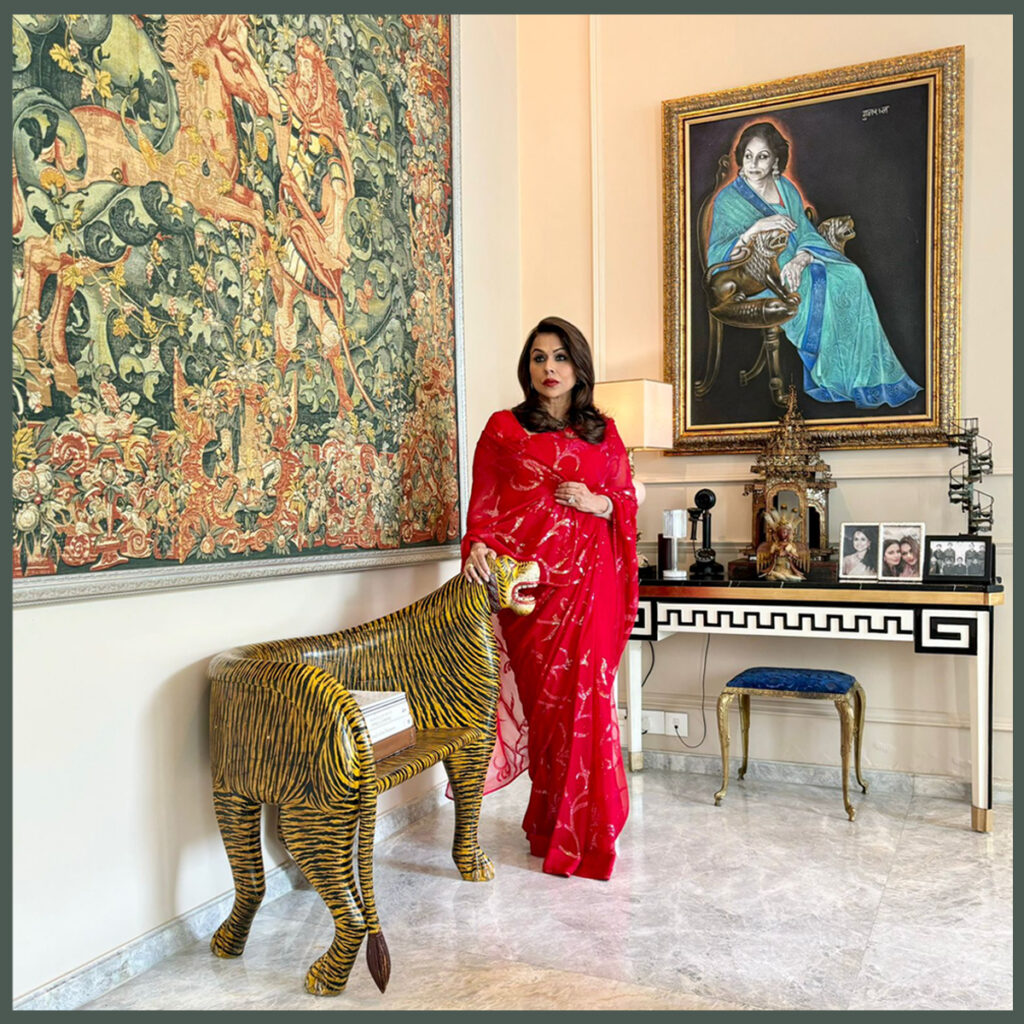
A visual delight to your eyes, Dakhin Dili, a sacred dialogue exhibition, was curated by noted designer and cultural patron Raseel Gujral Ansal. As you walk into the Bikaner House, your eyes will light up with the magnificent work of Tanjore, Pichwai and Orleographs, bringing the visual traditions of South India to North India.
The striking Tanjore paintings draw your eyes towards that quality of gold leaf catching light in a way that feels different from reflected light. The paintings speak itself as if they have a soul in them and are conversing directly with you. Dakhin Dilli– a sacred dialogue and prints of divine explore the depth and diversity of sacred imagery across the Indian subcontinent, bringing together artworks from various regions, traditions and centuries.
The amalgamation of South to North is not just about observation; it is more about giving attention to every piece of art. The Tanjore and Mysore paintings of the Deccan and the northern pichwai tradition explore how devotional imagery has shaped the subcontinent’s visual lexicon over centuries. Religious figurines, ritual vessels, amulets, talismans, shrines, temple idols and icons all symbolises centuries old tradition from ancient civilisations. They were more like a form of deity which were worshiped by the people in ancient India.
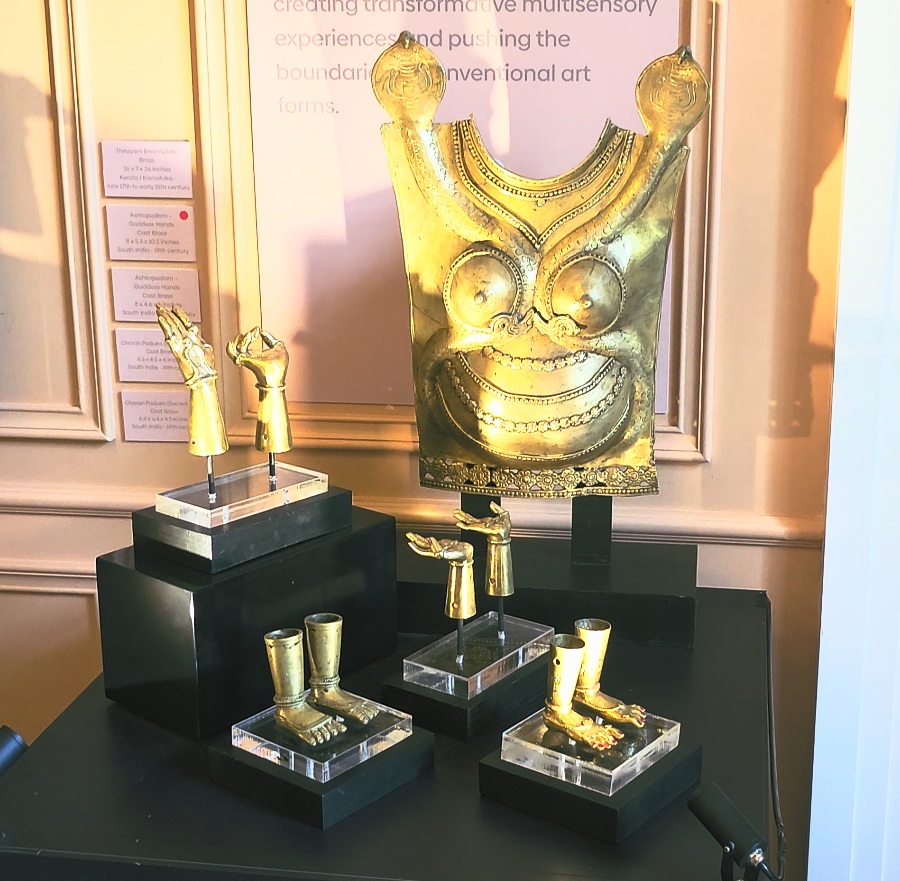
Journey from South to North
In the Indian subcontinent, the histories of art and devotion are deeply entangled in each piece that was displayed at the Bikaner House. Originating as a temple backdrop, the pichwai, a hand-painted art form, featured the life span of Krishna in various moods, festivals and pastoral landscapes. On one hand, where cows, forests, and ponds represent beauty and purity, evoking a celebration of emotion and nature, the other side represents the Indian traditions that is being worshiped from the centuries.
Scenes like Shrinath ji under the kadam tree, Rass Leela, and Bhav Mandal brimmed with music, movement, and love– the heart of bhakti spirit.
The Tanjore paintings from Mysore were richly made of gold leaf, semi-precious stones and depict mythological radiance. Beautiful paintings of Raghunathan Swami, Ashthalaxmi, and Panchmukhi Hanuman, presented the deities as eternal presence, glowing in divine opulence. Complementing them were the Mysore Reverse Glass Paintings, a delicate art form where tempera is painted on the reverse of glass to create luminous depth.
The Homecoming (Dakhin Dilli)
The visual journey of this beautiful amalgamation then travels to ‘Prints of Divine’, showcasing the evolution of the second imagery through Raja Ravi Varma and other lithographic innovations. Oleographs, the collection from Prem Kidwai’s private archive, had Lakshmi, Saraswati and Radha Rukmani, depicting a pivotal shift in the art history, bringing gods from the temple to the homes of ordinary people.
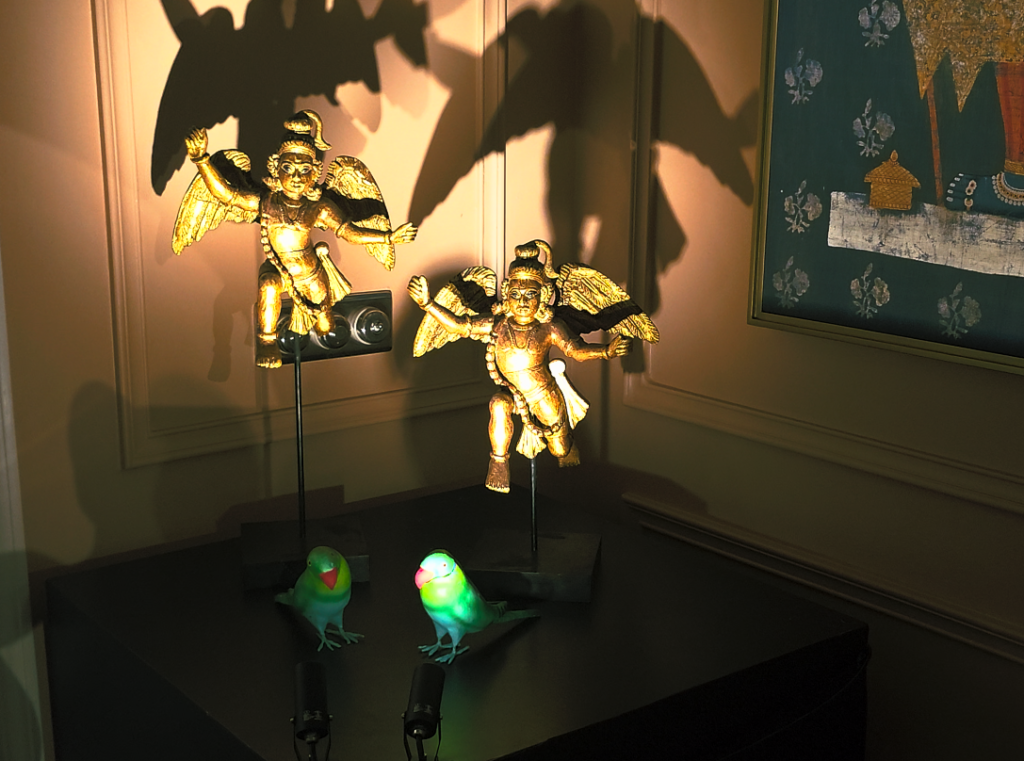
Raja Ravi Varma prints democratised sacred imagery in modern India. It was he who helped create the visual vocabulary of gods through which people came to imagine gods in the 20th century. This dialogue between the hand-painted sacred icons and printed reproductions offered a powerful reflection of accessibility.
Devotional art- a living legacy
Globally, where contemporary art is more dominant, Dakin-Dilli is a timely reminder that devotion has never been peripheral to Indian art history. At the exhibition, each artefact was not just an object of worship or admiration, but a participant in what Gujaral Ansal calls ‘A living and breathing aesthetics of the sacred.
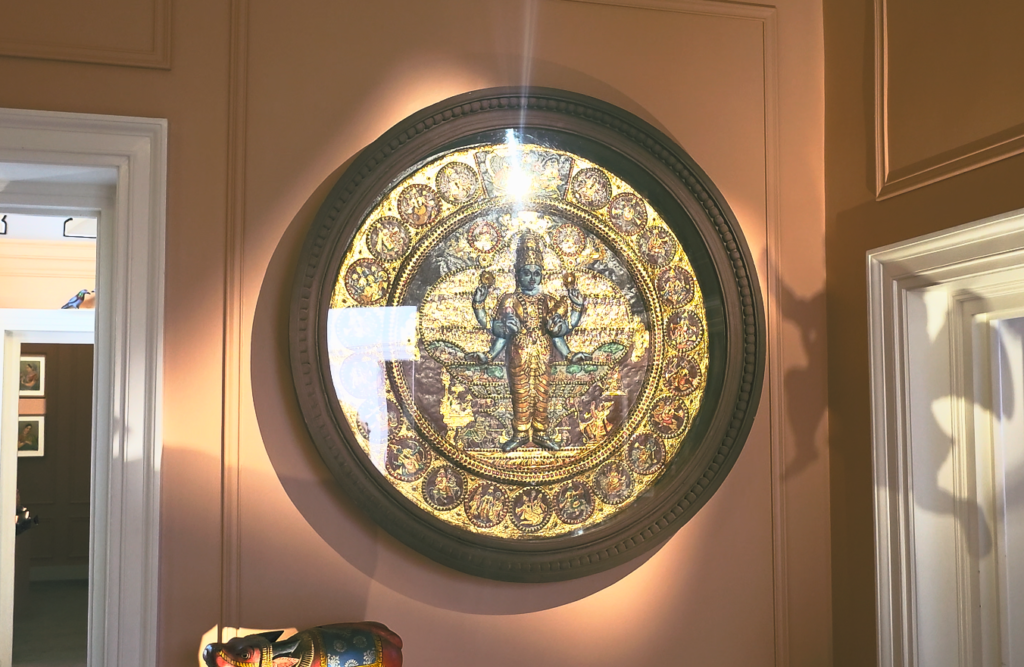
It was like a pilgrimage in itself, with luminous dietys, poetic landscapes, ritual mounds, guardian figures, each revealing faith not as static tradition but as something that unravels, adapts and thrives.
By bridging the centuries from 17th-century Tanjore works to 19th-century Oleographs, Dakhin-Dilli is a timely reminder to visitors that devotion can never be peripheral to Indian art history. It travels from one state to another and is a part of the cultural life. It is a true testament of how sacred has always transcended geography, finding new forms while preserving its timeless beauty.
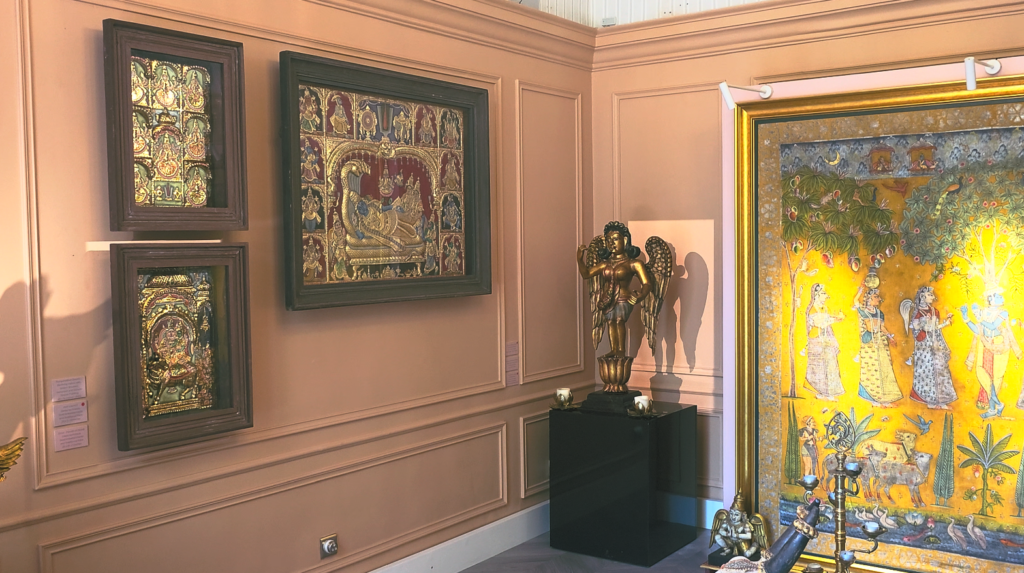
Across terracotta idols, temple murals, spirituality and religiousity, new forms, materials, and aesthetics have continuously emerged. One of the most significant cultural events, the exhibition is a rare synthesis of scholarship, curation, and artistry that draws viewers into the enduring beauty of faith in form.
In short, the exhibition is not only about art, but it is also about India’s spiritual imagination, which weaves the luminous South and the Lyrical North together.
From SFS Desk:
https://squarefootstory.com/up-rera-caps-property-transfer-fee-for-family-and-third-parties/
https://squarefootstory.com/lt-reality-acquires-land-expands-portfolio/
https://squarefootstory.com/square-foot-story-sfs-indias-real-estate-intelligence-platform/